Am I wasting my breath when I suggest eating better, exercising, and losing weight?
A lot of doctors think so.
I was discussing this with another physician this evening. Often, our solutions are pills -- you have high blood pressure, you get a prescription for amlodipine. You have high cholesterol, you get a script for simvastatin. You have palpitations, you get atenolol scribbled on a prescription pad.
But, what about diet and lifestyle? If, to lower your blood pressure to a normal range, you could cut back on the sodium in your diet, eat less fast food and more fruits and vegetables, would you do it? Or what if cutting back on (or better yet, eliminating) animal foods would slash your LDL cholesterol drastically without the need of a pill? Or, if cutting out your morning latte would eliminate your palpitations, would you do it?
True, many patients are set in their ways, or have emotional barriers that keep them from living a healthy lifestyle. But, I think patients are more motivated than we give them credit for. If the option is lifestyle change or a pill, I don't believe that most people will chose the pill.
Thursday, June 23, 2011


Friday, June 17, 2011
Track
Running track is one of my favorite workouts. It's full of adrenaline and pure speed, and yet also of learning to pace oneself.
I had not run track in over a year and a half. I was busy training last year for an Ironman, and there has also been the barrier of my office being far from the track.
But, the track is what has helped me go from being a 4:57 marathoner to a 4:12 marathoner, and hopefully even faster than that in the near future. I am grateful for all of my gains in running over the past couple of years, but I still want to one day run a marathon fast enough to qualify for the Boston Marathon.
Recently, I made a decision: I love the track, and as I need to get faster, I need to get back to the track. Unfortunately, my workplace is in West Hills, and the Los Feliz Flyers track workout is at Caltech in Pasadena. And I have two dogs at home eager to go outside. It's a tight commute, but I make it to track by 7 pm.
There are two groups at the track: The fast group, and the TOG's (aka The Other Group), the slower group. My pace makes me one of the faster TOG's, or it makes me the caboose of the fast group. When I last ran track, I was running with the faster group. And upon returning, I thought that's where I would start again.
The first track workout in a year and a half was a bit of a disaster. The workout was 400 repeats, or one lap around the track. I nailed the first one in 1:36, and smiled at our coach Don, like "hey look at me, I haven't gotten slower, I still have it!". Then the next lap was 1:39. Then 1:42. Then 1:44. I kept falling farther and farther behind on each lap. My heart rate was approaching 190 on each lap and barely came down with the short rests between laps. I was beat! I knew I'd blown up, and ended up quitting mid-workout.
Over the past several weeks, I've been running with the TOG's. I'm still one of their faster runners, but running with that group has helped me to not go out all guns ablaze, so to speak. And, even in six weeks of track, I'm faster than I was before I started this little stint. I ran a track mile in 7:09, my fastest ever, and my brick runs (running after getting off the bike) lately have been consistently faster.
My short-term goal is to get a bit faster and join the fast group. Long-term, my goal is to qualify for the holy grail of marathons -- Boston.
Boston 2013, look out, here I come!
I had not run track in over a year and a half. I was busy training last year for an Ironman, and there has also been the barrier of my office being far from the track.
But, the track is what has helped me go from being a 4:57 marathoner to a 4:12 marathoner, and hopefully even faster than that in the near future. I am grateful for all of my gains in running over the past couple of years, but I still want to one day run a marathon fast enough to qualify for the Boston Marathon.
Recently, I made a decision: I love the track, and as I need to get faster, I need to get back to the track. Unfortunately, my workplace is in West Hills, and the Los Feliz Flyers track workout is at Caltech in Pasadena. And I have two dogs at home eager to go outside. It's a tight commute, but I make it to track by 7 pm.
There are two groups at the track: The fast group, and the TOG's (aka The Other Group), the slower group. My pace makes me one of the faster TOG's, or it makes me the caboose of the fast group. When I last ran track, I was running with the faster group. And upon returning, I thought that's where I would start again.
The first track workout in a year and a half was a bit of a disaster. The workout was 400 repeats, or one lap around the track. I nailed the first one in 1:36, and smiled at our coach Don, like "hey look at me, I haven't gotten slower, I still have it!". Then the next lap was 1:39. Then 1:42. Then 1:44. I kept falling farther and farther behind on each lap. My heart rate was approaching 190 on each lap and barely came down with the short rests between laps. I was beat! I knew I'd blown up, and ended up quitting mid-workout.
Over the past several weeks, I've been running with the TOG's. I'm still one of their faster runners, but running with that group has helped me to not go out all guns ablaze, so to speak. And, even in six weeks of track, I'm faster than I was before I started this little stint. I ran a track mile in 7:09, my fastest ever, and my brick runs (running after getting off the bike) lately have been consistently faster.
My short-term goal is to get a bit faster and join the fast group. Long-term, my goal is to qualify for the holy grail of marathons -- Boston.
Boston 2013, look out, here I come!
Tuesday, June 07, 2011
AIM-HIGH? Not so high apparently.
Some things in medicine seem like common sense, but they are not.
Since heart disease and osteoporosis increase after menopause, when estrogen levels drop, it was thought that supplementing estrogen would help. Then the WISE study demonstrated that there may actually be harm in taking estrogen.
Diets high in fruits and vegetables, which in turn are high in vitamins, nutrients, and phytochemicals, lead to decreased risk of heart disease. So, it would make sense that vitamin supplements would help, right? Many studies and meta-analyses have looked at whether supplementing B vitamins, vitamin E, folate, or coenzyme Q10 would reduce the risk of heart disease. Not a single study has shown that vitamin or mineral supplementation reduces heart disease. In fact, vitamin E supplementation may increase the risk of stroke.
But niacin was thought to be different. Niacin raises HDL ("good cholesterol") levels and lowers triglycerides and LDL levels. Several small studies showed that niacin alone might reduce risk of cardiovascular events. Therefore, it was thought that if some is good, then more is better.
The AIM-HIGH trial of more than 12,000 patients already on statins with controlled LDL cholesterol sought to determine whether addition of long-acting niacin would further reduce cardiovascular events. However, the trial was recently stopped early because patients showed no decrease in cardiovascular events, but did experience an increase in risk for stroke. This increase in stroke was somewhat surprising, and there is no obvious explanation for the small but significant increased risk of stroke.
Another drug, torcetrapib, a CETP-inhibitor, which raises HDL, was studied a few years ago as a hope for patients with heart disease. However, studies showed increased all-cause mortality amongst patients on a combination of a statin and torcetrapib.
Dr. Neal Barnard of PCRM, the Physicians Committee for Responsible Medicine, has an interesting take on the subject. Artificially raising the HDL with medicine like niacin may not be what helps people live healthier and longer. The key may be healthy diet and exercise, which in turn raise HDL levels.
Better living doesn't necessarily come from better pharmacology. Healthy diet and lifestyle are still the cornerstone of reducing heart disease risk.
Since heart disease and osteoporosis increase after menopause, when estrogen levels drop, it was thought that supplementing estrogen would help. Then the WISE study demonstrated that there may actually be harm in taking estrogen.
Diets high in fruits and vegetables, which in turn are high in vitamins, nutrients, and phytochemicals, lead to decreased risk of heart disease. So, it would make sense that vitamin supplements would help, right? Many studies and meta-analyses have looked at whether supplementing B vitamins, vitamin E, folate, or coenzyme Q10 would reduce the risk of heart disease. Not a single study has shown that vitamin or mineral supplementation reduces heart disease. In fact, vitamin E supplementation may increase the risk of stroke.
But niacin was thought to be different. Niacin raises HDL ("good cholesterol") levels and lowers triglycerides and LDL levels. Several small studies showed that niacin alone might reduce risk of cardiovascular events. Therefore, it was thought that if some is good, then more is better.
The AIM-HIGH trial of more than 12,000 patients already on statins with controlled LDL cholesterol sought to determine whether addition of long-acting niacin would further reduce cardiovascular events. However, the trial was recently stopped early because patients showed no decrease in cardiovascular events, but did experience an increase in risk for stroke. This increase in stroke was somewhat surprising, and there is no obvious explanation for the small but significant increased risk of stroke.
Another drug, torcetrapib, a CETP-inhibitor, which raises HDL, was studied a few years ago as a hope for patients with heart disease. However, studies showed increased all-cause mortality amongst patients on a combination of a statin and torcetrapib.
Dr. Neal Barnard of PCRM, the Physicians Committee for Responsible Medicine, has an interesting take on the subject. Artificially raising the HDL with medicine like niacin may not be what helps people live healthier and longer. The key may be healthy diet and exercise, which in turn raise HDL levels.
Better living doesn't necessarily come from better pharmacology. Healthy diet and lifestyle are still the cornerstone of reducing heart disease risk.
Saturday, June 04, 2011
Go See Forks Over Knives!
I finally saw Forks Over Knives this week. It's a movie about how eating the right foods can reverse disease and save your life.
The message is simple: You are not doomed to a life of disease, even if it runs in your family. You have the power over what you put into your body. And, if you choose the right foods, particularly by following a plant-based (or as firefighter Rip Esselstyn puts it, "plant-strong") diet, you can avoid and reverse many diseases.
As a physician, the part I found interesting was observing Dr. Matt Lederman of the Exsalus Wellness Center conselling patients. The Exsalus Wellness Center, based in Los Angeles, is run by Dr. Lederman and his wife Dr. Alona Pulde. Their approach to health includes a plant-based diet. I think the concept of a wellness center is pretty cool. From hearing Dr. Lederman speak, I understand that he spends two hours of time with a patient for a new consultation. And, the patients who come to Exsalus are in many ways self-motivated -- as Exsalus does not directly accept insurance, the patients who are there have directly sought out Drs. Pulde and Lederman.
I'm a bit envious of them -- I'd love to have two hours to spend with each new patient. And I'd love to have a patient population eager to soak up knowledge about a plant-based diet. But, perhaps that's part of the challenge of what I do. While many patients seek me out knowing my approach to patient care, many see me by default because they are sent to me by their primary care physician.
Nonetheless, I think that the message of self-determination can ring true in just about any patient. When given the option, "I can give you a pill for this, or we can try to reverse this with diet and exercise," most patients will choose the latter option. And, this is an opportunity to get across to patients that they CAN change their lives just by what they choose to eat.
Forks Over Knives is one powerful movie -- it can change your life. No joke.
The message is simple: You are not doomed to a life of disease, even if it runs in your family. You have the power over what you put into your body. And, if you choose the right foods, particularly by following a plant-based (or as firefighter Rip Esselstyn puts it, "plant-strong") diet, you can avoid and reverse many diseases.
As a physician, the part I found interesting was observing Dr. Matt Lederman of the Exsalus Wellness Center conselling patients. The Exsalus Wellness Center, based in Los Angeles, is run by Dr. Lederman and his wife Dr. Alona Pulde. Their approach to health includes a plant-based diet. I think the concept of a wellness center is pretty cool. From hearing Dr. Lederman speak, I understand that he spends two hours of time with a patient for a new consultation. And, the patients who come to Exsalus are in many ways self-motivated -- as Exsalus does not directly accept insurance, the patients who are there have directly sought out Drs. Pulde and Lederman.
I'm a bit envious of them -- I'd love to have two hours to spend with each new patient. And I'd love to have a patient population eager to soak up knowledge about a plant-based diet. But, perhaps that's part of the challenge of what I do. While many patients seek me out knowing my approach to patient care, many see me by default because they are sent to me by their primary care physician.
Nonetheless, I think that the message of self-determination can ring true in just about any patient. When given the option, "I can give you a pill for this, or we can try to reverse this with diet and exercise," most patients will choose the latter option. And, this is an opportunity to get across to patients that they CAN change their lives just by what they choose to eat.
Forks Over Knives is one powerful movie -- it can change your life. No joke.
Monday, May 30, 2011
BBQ -- Vegan Style
I could talk your ear off about how tasty a healthy vegan meal can be. Or I can just feed you fabulous food. Yesterday, I threw a backyard BBQ. Here's what I served up:


Hors d'oeuvres -- cut up veggies, jicama, hummus, salsa, and (in the upper right corner) Texas Caviar, which consists of peppers, black and pinto beans, cilantro, jalapeno, vinegar, and date syrup.

More hors d'oeuvres -- to the left is a bean dip with vegetarian refried beans, guacamole, Tofutti sour cream, and Daiya vegan cheese.

"Crab cakes" made by Lisa K., from tempeh and some other ingredients, baked not fried. Yum!

Mom's chili -- made from a mix by Fantastic Foods, but with a few variations, including canellini beans and Muir Glen fire-roasted tomatoes.

And, you can't forget dessert!!! Chocolate brownies with chocolate frosting, and carrot cake.
Sunday, May 22, 2011
Chest Pain
If you have new chest pain, see your doctor. That's the most important thing I'm going to write today. Plain and simple.
Some people are embarrassed that they're making a big deal out of nothing. And to be honest, less than half of the new patients that I see with chest pain actually have pain due to heart disease. But, I have encountered a man in his mid 30's who attributed the pain in his chest that he got whenever he exercised to "gerd", or reflux. At 37 years old, he had a heart attack and underwent emergent bypass surgery.
Many things cause chest pain, other than heart disease -- a pulled muscle, inflammation of the cartilage of the ribs, esophageal reflux, esophageal spasm, anxiety, depression, injury, amongst other possible causes. But do not wait -- get it checked out. See your primary care doctor, and if needed, come see me or another cardiologist for an evaulation.
Some people are embarrassed that they're making a big deal out of nothing. And to be honest, less than half of the new patients that I see with chest pain actually have pain due to heart disease. But, I have encountered a man in his mid 30's who attributed the pain in his chest that he got whenever he exercised to "gerd", or reflux. At 37 years old, he had a heart attack and underwent emergent bypass surgery.
Many things cause chest pain, other than heart disease -- a pulled muscle, inflammation of the cartilage of the ribs, esophageal reflux, esophageal spasm, anxiety, depression, injury, amongst other possible causes. But do not wait -- get it checked out. See your primary care doctor, and if needed, come see me or another cardiologist for an evaulation.
Sunday, May 15, 2011
Tofu Scramble
This is so easy, and so healthy!
 Microwave a sweet potato until soft, allow to cool, remove the skin, and cut into cubes. Combine in a wok: Cubes of extra firm tofu, sweet potato, spinach leaves, salsa, turmeric, garlic, and either a splash of soy sauce or Bragg's liquid amino acids. Cook for about ten minutes and serve.

Thursday, May 05, 2011
Steak House Dinner
I eat healthy, and so do a lot of people. Not everyone else in this world does. But I realize I need to be able to roll with the punches in life, so to speak.
Last week, I attended a cardiology educational meeting at Arnie Morton's steak house. Now, I won't even start on the irony of learning to treat coronary disease in the setting of a steak house. I do realize, though, that every so often we end up by social necessity eating at a restaurant that we would not typically choose on our own.
As you might imagine, Morton's doesn't have a tofu stir-fry or lentil loaf on the menu. However, I spoke with our server Heather (fabulous first name, no?) and asked her what the chef could prepare. I ended up with the chopped salad with no bacon, eggs, or cheese, and with a mustard dressing, and for my entree a plate of steamed vegetables, a baked potato, and a side of soy sauce:

I must say, the steamed veggies were quite delicous. It was a huge plate and I didn't finish everything, but I did polish off all the spinach, broccoli, tomatoes, mushrooms, and about half of the asparagus and brussel sprouts.
Would I have enjoyed a more interesting dinner, perhaps with a protein, just like my colleagues enjoying their steak or fish? Sure. But, I think that as a vegan, it's important to go to restaurants that don't solely cater to non-meat-eaters. If they have enough of us as customers, perhaps one day they'll put something on the menu for us.
The most important point: You can get a good healthy meal at just about any nice restaurant. You are the customer. Just ask.
Last week, I attended a cardiology educational meeting at Arnie Morton's steak house. Now, I won't even start on the irony of learning to treat coronary disease in the setting of a steak house. I do realize, though, that every so often we end up by social necessity eating at a restaurant that we would not typically choose on our own.
As you might imagine, Morton's doesn't have a tofu stir-fry or lentil loaf on the menu. However, I spoke with our server Heather (fabulous first name, no?) and asked her what the chef could prepare. I ended up with the chopped salad with no bacon, eggs, or cheese, and with a mustard dressing, and for my entree a plate of steamed vegetables, a baked potato, and a side of soy sauce:

I must say, the steamed veggies were quite delicous. It was a huge plate and I didn't finish everything, but I did polish off all the spinach, broccoli, tomatoes, mushrooms, and about half of the asparagus and brussel sprouts.
Would I have enjoyed a more interesting dinner, perhaps with a protein, just like my colleagues enjoying their steak or fish? Sure. But, I think that as a vegan, it's important to go to restaurants that don't solely cater to non-meat-eaters. If they have enough of us as customers, perhaps one day they'll put something on the menu for us.
The most important point: You can get a good healthy meal at just about any nice restaurant. You are the customer. Just ask.
Tuesday, May 03, 2011
Wildflower 2011 -- A Tough Day for a Personal Best
Wildflower is a favorite race of mine -- the second toughest half-Ironman distance course in North America (1.2 mile swim, 56 mile bike, 13.1 mile run). The course is infamous for its hilly bike and challenging trail run. Wildflower is also known for its camping experience.
I've raced Wildflower previous years, and I've camped out in my tent, shivering and miserable, barely getting any sleep. That has made racing even more challenging, and particularly led to a less than stellar race for me last year. I vowed that if I ever came back to race that I would not be camping.
When a couple of friends invited me to join them in renting a house, I decided that I wanted to give Wildflower Long Course another shot. And, with eight hours of good sleep and weeks of hard training, I was ready on race morning.
Swim
The beginning of the swim was more crowded than I had remembered. Perhaps it felt crowded because I haven't been in open water since September.... oops :) But, after rounding the first buoy, the crowd dispersed and I settled into my stroke. Halfway through the swim, I felt waves. I could see a Sheriff's boat circling, and a couple boats next to them. I have enough open water experience that even though I was expending some extra energy, I had no trouble getting through them. I could see a couple of women around me who had started the race before I did and I could tell they were having a tough time with the choppiness of the water.
As I swam, I noticed one of my old bad habits -- I use the swim caps in front of me to determine which way to swim, as opposed to sighting off of a landmark like a buoy. If I ever become a swimming frontrunner in a race, I will be in big trouble. But that likely won't ever happen.
My goal was to swim in 40 minutes. I finished in 40 minutes and change.
Bike
The Wildflower bike course presents challenges of its own. Coming straight out of the transition area, riders head straight up Beach Hill. That's me beginning the climb:
 Beach Hill is steep and it's nearly 2 miles long. It would be easy to stand on the bike, grind out the hill, and trash my legs, but then again there are 54 more miles to ride. After that are some rollers. Lots of people pass me. I'm used to that -- the bike is my weakness. Then the road flattens out. And then we picked up a really strong headwind. I'm pedaling hard and I feel like I'm barely moving, but my bike computer tells me I'm only moving at 10 miles per hour! So of course I'm thinking, what's wrong with me, but as I think about it more, no one is passing me, so it must be the wind.
After 8 or so miles of miserable headwind, we turn right onto Jolon Road, where the headwind becomes a side wind (is that the term for it? I don't know, but I think you understand what I'm saying). The wind is blowing me to the right, and at times I have trouble staying upright on my bike. And finally, the wind seems to settle down just as we reach the infamous Nasty Grade hill at mile 42. I felt okay, and after weeks of hill riding, I sailed up the hill, passing at least 20 riders, and not a single one passing me.
My goal was 3:40. This took me 3:53. I blame the wind.
Run
After that grueling ride, we now get to run 13.1 miles of trails. The first six miles are the toughest, with plenty of steep hills. A lot of people walk at this point, but I ran up all of them except for three particularly steep hills that I power-walked. The balls of my feet were absolutely burning -- if I stepped on a rock, they would hurt even more. But, as I kept running, the pain got to be bearable.
After the trails, we run through the campground, with plenty of cheering. And that's about where this picture was taken:
 Next was an out-and back uphill and down, and then back up and down again, and a small hill and then a long descent of about half a mile into the finish.
I finished the run in 2:22, which was around my goal of 2:20.
My time: 7:04:11, beating my personal best by seven minutes. A tough day, but a good race for me.
I've raced Wildflower previous years, and I've camped out in my tent, shivering and miserable, barely getting any sleep. That has made racing even more challenging, and particularly led to a less than stellar race for me last year. I vowed that if I ever came back to race that I would not be camping.
When a couple of friends invited me to join them in renting a house, I decided that I wanted to give Wildflower Long Course another shot. And, with eight hours of good sleep and weeks of hard training, I was ready on race morning.
Swim
The beginning of the swim was more crowded than I had remembered. Perhaps it felt crowded because I haven't been in open water since September.... oops :) But, after rounding the first buoy, the crowd dispersed and I settled into my stroke. Halfway through the swim, I felt waves. I could see a Sheriff's boat circling, and a couple boats next to them. I have enough open water experience that even though I was expending some extra energy, I had no trouble getting through them. I could see a couple of women around me who had started the race before I did and I could tell they were having a tough time with the choppiness of the water.
As I swam, I noticed one of my old bad habits -- I use the swim caps in front of me to determine which way to swim, as opposed to sighting off of a landmark like a buoy. If I ever become a swimming frontrunner in a race, I will be in big trouble. But that likely won't ever happen.
My goal was to swim in 40 minutes. I finished in 40 minutes and change.
Bike
The Wildflower bike course presents challenges of its own. Coming straight out of the transition area, riders head straight up Beach Hill. That's me beginning the climb:

After 8 or so miles of miserable headwind, we turn right onto Jolon Road, where the headwind becomes a side wind (is that the term for it? I don't know, but I think you understand what I'm saying). The wind is blowing me to the right, and at times I have trouble staying upright on my bike. And finally, the wind seems to settle down just as we reach the infamous Nasty Grade hill at mile 42. I felt okay, and after weeks of hill riding, I sailed up the hill, passing at least 20 riders, and not a single one passing me.
My goal was 3:40. This took me 3:53. I blame the wind.
Run
After that grueling ride, we now get to run 13.1 miles of trails. The first six miles are the toughest, with plenty of steep hills. A lot of people walk at this point, but I ran up all of them except for three particularly steep hills that I power-walked. The balls of my feet were absolutely burning -- if I stepped on a rock, they would hurt even more. But, as I kept running, the pain got to be bearable.
After the trails, we run through the campground, with plenty of cheering. And that's about where this picture was taken:

I finished the run in 2:22, which was around my goal of 2:20.
My time: 7:04:11, beating my personal best by seven minutes. A tough day, but a good race for me.
Saturday, April 23, 2011
Forks Over Knives -- The Movie
If you are concerned about heart disease, you need to see this movie:
"If the truth be known, coronary artery disease is a toothless paper tiger that need never, ever exist and if it does exist it need never, ever progress." -Caldwell Esselstyn, M.D.
"If the truth be known, coronary artery disease is a toothless paper tiger that need never, ever exist and if it does exist it need never, ever progress." -Caldwell Esselstyn, M.D.
Thursday, April 21, 2011
My Big Fat Vegan Passover Seder
"What do you mean, you don't eat no meat?.... That's ok, I make lamb!"
Quote from My Big Fat Greek Wedding
For my first seder that I prepared on my own, I thought I'd have my family and a couple of friends, and it would be a small festival. But, as I put the word out, many people were looking for a seder, some had never attended one and wanted to know more about Passover, and others were just curious what a vegan seder would be like. Next thing I knew, I had twenty guests in my home!!!

Seder Table -- Seder plate, matzah, and small glass of wine for Elijah the Prophet
My 5 1/2 year-old niece painted the seder plate. She painted all the spots on the plate except for the spot for the shankbone, "Because we don't eat meat." Cute. In place of the bone, I placed a few beets on the plate, and a vegetarian friend brought his very own "tofu shankbone." Traditionally there is an egg on the plate to represent the spring; instead we had a flower.
Passover has become a holiday of excessive processed foods, cottonseed oil, fat, and too many eggs. Clearly, this is not the case in my home. This is a Vegetable and Matzah Casserole from The Vegetarian Pesach Cookbook by Roberta Kalechofsky:

Russian Potato and Mushroom Croquettes from Debra Wasserman's The Lowfat Jewish Vegetarian Cookbook:

And you cannot ever ever ever forget dessert!!!! One friend brought one of the infamous box mixes of brownies, but she used flax seed instead of eggs. It came out quite good! This is the No Bake Chocolate Matzoh Roll from The Vegetarian Pesach Cookbook.

And, what kind of holiday is it if the pets don't get to participate? Here, my dog Curves eagerly finds the afikoman, or hidden matzah! :)

It should be the youngest child who finds the afikoman, not the youngest dog, right? My mischevious dog Curves.
Have a joyous Pesach, and please, go easy on the eggs!
Sunday, April 17, 2011
Training for Wildflower Long Course
It's been a bit too long since I've posted.... so I will update you on my training. Coming soon, you'll get to read about my first Passover seder that I've hosted. I will be having about 18 people at my home and the seder will all be vegan (and cardiologist-approved!)

I am again doing Wildflower Long Course -- a half Ironman-distance race (1.2 mile swim, 56 mile bike, 13.1 mile run) which is one of the toughest in North America. The bike course is hilly, as is the run which more than half of it is on trails.
This year, I've switched coaches to Gerardo from Fortius Coaching. He's definitely having me train harder than I ever have for a half-ironman distance race. Rather than the 12-hours per week that I've become accustomed to when getting ready for one of these races, I'm doing 16-17 hours per week of training. He also has me doing far more hill work on the bike and running. I can't remember the last training run that was completely flat!
Two years ago, I finished in 7 hours 11 minutes. Last year was a disaster due to a busy few days at work beforehand, and my inability to get any sleep at the campground before the race. This time around, I'm not camping -- after all, I hate camping. A group of us is renting a house. So, I plan on being well-rested with the chance of finishing in under 7 hours.
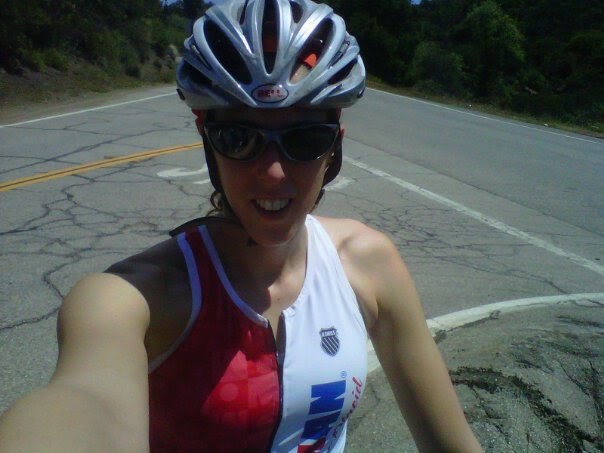
51 mile bike ride yesterday -- climbed both Latigo and Mulholland!
This year, I've switched coaches to Gerardo from Fortius Coaching. He's definitely having me train harder than I ever have for a half-ironman distance race. Rather than the 12-hours per week that I've become accustomed to when getting ready for one of these races, I'm doing 16-17 hours per week of training. He also has me doing far more hill work on the bike and running. I can't remember the last training run that was completely flat!
Two years ago, I finished in 7 hours 11 minutes. Last year was a disaster due to a busy few days at work beforehand, and my inability to get any sleep at the campground before the race. This time around, I'm not camping -- after all, I hate camping. A group of us is renting a house. So, I plan on being well-rested with the chance of finishing in under 7 hours.
Saturday, April 02, 2011
Time to Start Exercising!!!
What's your excuse?
I've heard them all. But, it's time to see the excuse for what it is, realize that exercise is crucial to good health, and start or get back to making it a habit.
A good goal for everyone is to get at least thirty minutes of cardiovascular exercise most days of the week -- this is exercise that is sustained and keeps the heart rate elevated. This means a heart rate of 60-85% of your predicted maximal heart rate, though an easier gauge of exertion is that you should be able to carry on a conversation, but talking should be just a little challenging.
Here are some of the excuses I hear every day:
"I'm too tired"
Exercise gives you energy. The more you move, the more energy you have. If you don't move, you have less energy.
"I have no time"
Your body and your arteries could care less how much "time" you have. Make the time, it's important. Do you have ten minutes during your lunch break to get outside and walk? Do you have a couple minutes before dinner, or after dinner? I'm sure you do. I fit it in by getting up early in the morning, often 5:00 am, to get my workout in before I see patients.
"I have arthritis -- my knees/hips/back hurts"
Again, your arteries don't care about your aches and pains. And, in fact, for some of those pains will benefit from exercise and range of motion. If walking hurts, then get on a bicycle, or swim or walk in a pool.
"I have an active job"
Occasional lifting of heavy items or intermittent walking are not the sustained cardiovascular exercise that your heart benefits from. Unless you are a valet who is literally running for hours to fetch cars, a bike courier, or you're doing some sort of continuous exercise for thirty or so minutes of a time, your job doesn't count as exercise.
"I stretch" "I lift weights"
Great, I'm sure you're very limber or strong. But that's not the sustained cardiovascular exercise that will keep your heart healthy.
"I'm lazy"
Really? Don't be.
 That's me, at about 25 1/2 miles into the LA Marathon, setting a good example for my patients and exercising :)
I've heard them all. But, it's time to see the excuse for what it is, realize that exercise is crucial to good health, and start or get back to making it a habit.
A good goal for everyone is to get at least thirty minutes of cardiovascular exercise most days of the week -- this is exercise that is sustained and keeps the heart rate elevated. This means a heart rate of 60-85% of your predicted maximal heart rate, though an easier gauge of exertion is that you should be able to carry on a conversation, but talking should be just a little challenging.
Here are some of the excuses I hear every day:
"I'm too tired"
Exercise gives you energy. The more you move, the more energy you have. If you don't move, you have less energy.
"I have no time"
Your body and your arteries could care less how much "time" you have. Make the time, it's important. Do you have ten minutes during your lunch break to get outside and walk? Do you have a couple minutes before dinner, or after dinner? I'm sure you do. I fit it in by getting up early in the morning, often 5:00 am, to get my workout in before I see patients.
"I have arthritis -- my knees/hips/back hurts"
Again, your arteries don't care about your aches and pains. And, in fact, for some of those pains will benefit from exercise and range of motion. If walking hurts, then get on a bicycle, or swim or walk in a pool.
"I have an active job"
Occasional lifting of heavy items or intermittent walking are not the sustained cardiovascular exercise that your heart benefits from. Unless you are a valet who is literally running for hours to fetch cars, a bike courier, or you're doing some sort of continuous exercise for thirty or so minutes of a time, your job doesn't count as exercise.
"I stretch" "I lift weights"
Great, I'm sure you're very limber or strong. But that's not the sustained cardiovascular exercise that will keep your heart healthy.
"I'm lazy"
Really? Don't be.

Sunday, March 20, 2011
LA Marathon 2011 -- Cold and Rainy
Today was far from an ideal day. In a race where hundreds dropped out due to hypothermia, I'm grateful to have finished as well as I did.


My Marathon Bib -- Keeping it Unique!!!
My morning started at 3:20 am. By 4:20, I parked my car at my friend's condo in Santa Monica and walked to the shuttle buses. I arrived at Dodger Stadium by 5:15 am, with over two hours to kill until the race. In avoiding the morning chill, I intermittently sat, laid down and napped, ate bananas and soy yogurt, and used the port-o-potties about five times (yes, really).
Around 7 am, I checked my gear bag and fought through the crowd to get to my seeded corral, for runners who had previously completed sub-5-hour marathons. The crowd of us was told that the corral closed at 7 am, which of course we had never been told, and created chaos and anxiety, and finally we were permitted to enter the seeded corral area.
Unlike last year, in which we waited forty-five minutes for shuttle buses to get off the jammed up freeway and drop off the rest of the runners, we started on time. It was kind of funny because I think the gun went off earlier than it was supposed to -- the announcer gave a "Runners......" like he was going to say "get set" or something like that, but then *BOOM*! And, the "We Love LA" song that plays at the beginning of every marathon started late and was skipping all over the place. It was definitely an awkward start.
With the help of my coach Gerardo of Fortius Racing, I had decided that my strategy for a goal race time of 4:05 would be to run 9:20 per mile splits. The first three miles were downhill, and I probably did each one in 9:10. People were passing me all over the place. But, as a seasoned marathoner, I know to let them go. To paraphrase my first triathlon and running coach Mary Eggers, "There are two kinds of people who will pass you at the beginning of a marathon -- people who are faster than you, and people who will be walking at mile 22."
Less than a mile into the race, it began to rain. This would be the theme of the day -- rain and cold. At mile one, I ditched my waterproof jacket and was running in a tank top singlet and shorts. I kept my gloves on, but by mile five, I tucked those into my shorts and ultimately disposed of them mid-race. While it may have been fifty degrees and pouring rain, I didn't feel cold.
Mile four presents the biggest hill of the course -- a short, steep hill up to Disney Concert Hall. I practice hills regularly, so this was no big deal to me. With another uphill at mile five, and a port-o-potty stop, the next few splits were a bit slower. Around the seventh mile, I ran into an LA Tri Club member who I know who was out on the course doing a training run. He paced me for the next four miles into Hollywood and gave me someone to talk to, which made the run a bit easier.
The rain poured harder, and at times felt absolutely torrential. While I felt okay, I found out after the race that hundreds of runners dropped out, and several runners were taken to local hospitals with hypothermia.
I love running through Hollywood. We ran along the Walk of Fame on Hollywood Boulevard, and then down the Sunset Strip. This was about midway through the race. Though my socks and shoes were soaked and the rain was pouring, I felt good and strong. My time was a bit off at 2:04:00 at the half marathon point, so I thought that since I felt well I might still be able to hit my goal if I got back on my 9:20 pace.
And, I continued to feel pretty good. The bottoms of my feet were sore, I had a mild ache in my right hip, but compared to other marathons I've done, I felt great. But my splits were off -- they were more like 9:45 than the 9:20 that I was aiming for.
I continued to feel good running down Santa Monica Boulevard in West Hollywood, and then down Burton and Rodeo Drive in Beverly Hills. Once I reached mile 18 in Century City, I had a brief pep talk to myself: Look, you feel good, now is the time to pick up the pace and try to hit your goal. If nothing else, let's at least try to get a PR (personal record -- my best prior marathon was Long Beach 2009 which I ran in 4:12:55).
About now, I started passing people. A seasoned marathoner, and as this was my tenth marathon I think I can call myself "seasoned", knows how to pace herself. Though I was passing more than I was being passed, and I still felt good, I just couldn't get much faster.
The toughest part of the race is about mile 20, through the VA Hospital grounds. There's a significant uphill, and the scenery is blah at best. The rain was absolutely pouring, I had given up on trying to run around puddles and landed right in them without caring as my feet were already drenched, and my legs were starting to ache.
Next is the turn onto San Vicente Boulevard. The Hirshberg Foundation had an enthusiastic group with loud upbeat music and I would consider them the highlight of the entertainment on the course -- it's impossible to pass them and not feel energized. They're also an organization that I support since the father of one of my closest friends died of pancreatic cancer. So, from here, most of the course was downhill on San Vicente Boulevard. In spite of my legs feeling heavy and tired, I was moving along at a good pace. I passed far more runners than passed me. There were lots of spectators and a number of people that I knew, and their encouragement pushed me toward the finish line.
Turning the corner from San Vicente onto Ocean Blvd, the end was in sight with about a mile left to go. Fortius Coaching had an enthusiastic group cheering us on, and from there on out, I just pushed to the finish line.

My finish time: 4:12:59. Just four seconds slower than my best marathon, Long Beach 2009, which was run in much sunnier conditions.
It felt so good to be done!!! I must not have looked so good because one of the medical staff approached me, and I smiled, said I'm a doctor, and I'm okay, and he let me be. However, hundreds who crossed the finish line, mostly those who finished after me and likely weren't running the whole thing and thus didn't keep their core temperature up, were treated for hypothermia shortly after finishing.
I walked the long three-quarters of a mile or so to the marathon finisher's festival area. It was pretty empty since not many people wanted to make the trek in the cold and rain. I was shivering. The music was horrible, the gear check was horribly disorganized so I decided not to wait for my bag for fear of becoming hypothermic. However, since there were so few people at the finisher's festival, I received about ten bags of potato chips and a dozen Clif bars because so few people came to take them.
All in all, it was a tough day with pouring rain and cold temperatures. I didn't hit my goal, but I think I did well given the extremes in the weather. I feel like if this was a warmer day without rain that I could have done better. But, as I know others fared worse than I did with respect to their goals and the weather, I am grateful.
Thursday, March 17, 2011
Salad Du Jour

Sunday, March 13, 2011
One Week Until the LA Marathon
I don't typically get nervous about races. But I am getting antsy about the LA marathon on March 20, just one week away.
I've been training hard. I've put in at least eight runs of 15 miles or longer. I've done them on about a ten minute per mile pace, and I've managed to run the last few miles of those runs on about a 9:00-9:15/mile pace.
I had a personal best half marathon time in January at the Los Angeles 13.1 -- 1:57:00.
Yesterday, my "taper" workout was a three mile warm-up, six miles at "marathon pace", and a one mile cooldown. I decided that for the sake of this run that 9:15 per mile is my marathon pace, and I managed to do that while keeping my heart rate in a respectable range of 155-165 per minute.
So what kind of time will that get me in a marathon? My personal best is 4:12 at Long Beach in 2009. I can beat that. One online pace calculator says that based on my half marathon that I can hit 4:08. My coach thinks I can hit 4 hours. I think 4:05 is a reasonable goal. I'm not sure.
I care so much about this because I want to qualify for the Boston Marathon. It's a far away dream, but I think that with the right training that I can do it. The qualification standards just got tougher, but that just means that I have to get tougher.
This week is a taper week. A few short runs, and some yoga and stretching. And hopefully plenty of sleep so that I am well rested and ready on Sunday.
I've been training hard. I've put in at least eight runs of 15 miles or longer. I've done them on about a ten minute per mile pace, and I've managed to run the last few miles of those runs on about a 9:00-9:15/mile pace.
I had a personal best half marathon time in January at the Los Angeles 13.1 -- 1:57:00.
Yesterday, my "taper" workout was a three mile warm-up, six miles at "marathon pace", and a one mile cooldown. I decided that for the sake of this run that 9:15 per mile is my marathon pace, and I managed to do that while keeping my heart rate in a respectable range of 155-165 per minute.
So what kind of time will that get me in a marathon? My personal best is 4:12 at Long Beach in 2009. I can beat that. One online pace calculator says that based on my half marathon that I can hit 4:08. My coach thinks I can hit 4 hours. I think 4:05 is a reasonable goal. I'm not sure.
I care so much about this because I want to qualify for the Boston Marathon. It's a far away dream, but I think that with the right training that I can do it. The qualification standards just got tougher, but that just means that I have to get tougher.
This week is a taper week. A few short runs, and some yoga and stretching. And hopefully plenty of sleep so that I am well rested and ready on Sunday.
Sunday, February 20, 2011
Sunday Brunch
Mom and I whipped up this brunch in about 30 minutes:


On the left is a tofu scramble with spinach and sweet potato. I sauteed this in a wok, with no oil added, just some pepper, turmeric, and garlic. On the right are pancakes made from the Aunt Jemima box mix -- instead of adding eggs, we used Ener-G Egg Replacer, a tapioca and potato starch egg substitue.

A big salad with lettuce, carrots, red peppers, cucumber, pear, ground flax seeds, and dried cranberries.

Friday, February 11, 2011
My Coke (Zero) Habit
Growing up, and through college, med school, and internship, I drank plenty of regular pop/soda -- and I say pop because as a product of the Midwest, that's what it is -- pop, not soda. As an intern on call, I carried a 20-ounce bottle of Coke in my pocket.
Sometime around the end of internship, as I thought about all the empty calories that I was getting from soda, I decided to give it up. Since then, it's been a rare treat at a social event, limited to about four ounces, which is enough to fulfill my craving.
Then I started training for the Ironman. Life became work, sleep, train, eat, work, sleep... you get the idea. I was tired. A cup of green tea was my pre-workout fuel, but then the Coke Zero can became a fixture on my desk at work during morning clinic. I loved it -- the taste, the fizz, the caffeine, everything about it. Next thing I knew, I was drinking nearly a liter a day of Coke Zero.
 Now, I've read Skinny Bitch, and I know there's concern about aspartame. And I know that putting processed crap into the body just isn't a good idea. But I love this stuff. I've cut back to one can, maybe two, per day.
A can a day can't be bad, right? Not according to the most recent data on the subject.
A recent abstract presented at the International Stroke Conference this week suggests that heavy consumption of both diet and regular soda in patients over age 65 is associated with a 61% increased risk of vascular events, including stroke and heart attack. The risk remained even after adjusting for other risk factors.
The study is not perfect -- it was a small observational study of 2500 patients at one site and looked only at older patients. While diet soda consumption has been linked to diabetes and the metabolic syndrome, this is the first study to link soda to vascular events.
So what about a 35 year-old vegan triathlete cardiologist with a one-can-a-day habit?
As I look across my desk at the empty soda can, I think it's time to give it up. I may continue to drink diet soda at social gatherings, but as a daily habit, it's just not necessary.
UPDATE: April 1, 2012 -- As of January 1, 2012, I have not had a sip of diet soda. I'm done with it and I feel better for it. Read about it here.
Sometime around the end of internship, as I thought about all the empty calories that I was getting from soda, I decided to give it up. Since then, it's been a rare treat at a social event, limited to about four ounces, which is enough to fulfill my craving.
Then I started training for the Ironman. Life became work, sleep, train, eat, work, sleep... you get the idea. I was tired. A cup of green tea was my pre-workout fuel, but then the Coke Zero can became a fixture on my desk at work during morning clinic. I loved it -- the taste, the fizz, the caffeine, everything about it. Next thing I knew, I was drinking nearly a liter a day of Coke Zero.

A can a day can't be bad, right? Not according to the most recent data on the subject.
A recent abstract presented at the International Stroke Conference this week suggests that heavy consumption of both diet and regular soda in patients over age 65 is associated with a 61% increased risk of vascular events, including stroke and heart attack. The risk remained even after adjusting for other risk factors.
The study is not perfect -- it was a small observational study of 2500 patients at one site and looked only at older patients. While diet soda consumption has been linked to diabetes and the metabolic syndrome, this is the first study to link soda to vascular events.
So what about a 35 year-old vegan triathlete cardiologist with a one-can-a-day habit?
As I look across my desk at the empty soda can, I think it's time to give it up. I may continue to drink diet soda at social gatherings, but as a daily habit, it's just not necessary.
UPDATE: April 1, 2012 -- As of January 1, 2012, I have not had a sip of diet soda. I'm done with it and I feel better for it. Read about it here.
Sunday, January 16, 2011
Sodium
Sodium. Salt. It's the bane of my existence as a cardiologist.
In medical school, we learn that 85% of diagnosis is history. This is very true, especially when it comes to uncontrolled hypertension or congestive heart failure.
Why does sodium matter? Sodium consumption leads to retention of fluid. This can raise the blood pressure, and in someone with a weak or stiff heart, can lead to congestive heart failure.
 When I encounter a patient with an extremely elevated blood pressure or new onset heart failure, the first thing I ask about is diet.
Me: Do you watch your salt intake?
Patient: Yes, I never add salt to my food.
And there is the first fallacy: Just because you are not salting your food does not mean you are consuming a low-sodium diet. There is often plenty of sodium in the food you are eating.
Me: What did you eat yesterday?
The answers to this question are always interesting. Here are some of the recent high-sodium items consumed by patients of mine:
Soup "but it was homemade soup, not from a can"
Pad Thai "with just a quarter of a cup of fish sauce"
Hot dogs
In 'N Out Burger
Pizza
Various foods on a cruise ship
Las Vegas buffet
If you are eating at a restaurant, you can assume you're getting a ton of sodium. Any soups, or entrees labled au jus, in broth, marinated, in soy sauce, these will all be highest in sodium. Or, if it comes from a box or a can at the grocery store, be cautious and read the label. And finally, any homemade broth from an animal is loaded with sodium -- the drippings of the animal are very concentrated in sodium.
Read here for more on diet and hypertension and heart failure.
Image from legacy.co.mohave.az.us
In medical school, we learn that 85% of diagnosis is history. This is very true, especially when it comes to uncontrolled hypertension or congestive heart failure.
Why does sodium matter? Sodium consumption leads to retention of fluid. This can raise the blood pressure, and in someone with a weak or stiff heart, can lead to congestive heart failure.

Me: Do you watch your salt intake?
Patient: Yes, I never add salt to my food.
And there is the first fallacy: Just because you are not salting your food does not mean you are consuming a low-sodium diet. There is often plenty of sodium in the food you are eating.
Me: What did you eat yesterday?
The answers to this question are always interesting. Here are some of the recent high-sodium items consumed by patients of mine:
Soup "but it was homemade soup, not from a can"
Pad Thai "with just a quarter of a cup of fish sauce"
Hot dogs
In 'N Out Burger
Pizza
Various foods on a cruise ship
Las Vegas buffet
If you are eating at a restaurant, you can assume you're getting a ton of sodium. Any soups, or entrees labled au jus, in broth, marinated, in soy sauce, these will all be highest in sodium. Or, if it comes from a box or a can at the grocery store, be cautious and read the label. And finally, any homemade broth from an animal is loaded with sodium -- the drippings of the animal are very concentrated in sodium.
Read here for more on diet and hypertension and heart failure.
Image from legacy.co.mohave.az.us
Friday, January 07, 2011
Resolutions
My resolution is to do more yoga and to stretch.
In the past, I've been of the mindset that you train hard to get better. Which to some extent is true. But, it's important to take care of your body too. Yoga helps to strengthen and stretch. Massage is good too. I think that a combination of massage and yoga has helped improve and nearly resolve a hip flexor strain that I had been dealing with over the past few months.
 |
| Me and my nieces doing yoga on the Wii Fit |
Subscribe to:
Posts (Atom)


